Sorting 1,000+ cards without losing a weekend
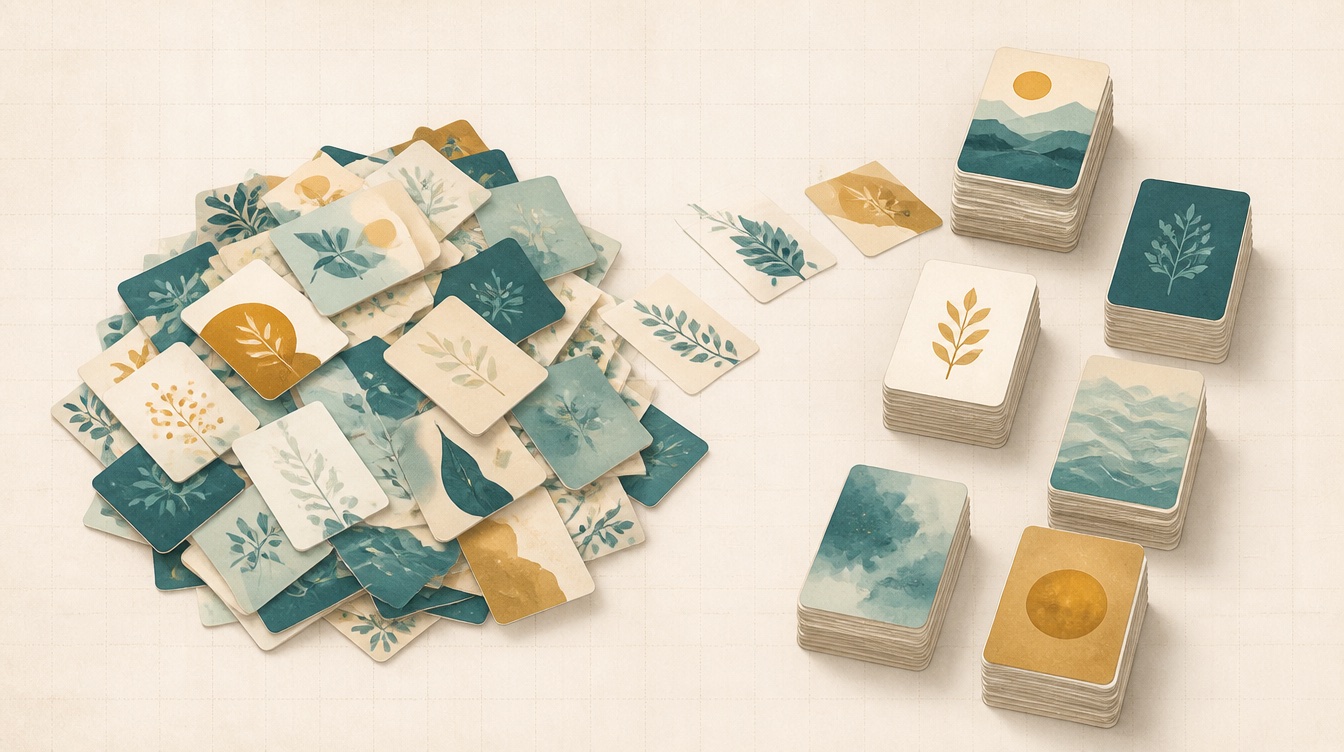
Sorting 1,000+ cards fast means doing broad passes only and stopping once cards are findable, not once they're perfect. Pull anything worth protecting first, split the rest into a handful of big buckets, and only fine-sort within a bucket if you'll actually need to find something specific inside it later. Most people lose a weekend to this because they try to make one perfect pass through the whole pile instead of several fast ones.
Pass one: pull the cards that don't belong in bulk
Before any real sorting starts, go through the pile once, fast, and pull anything you recognize as worth more than pocket change: foils, cards from a set you know is valuable, anything you'd be annoyed to lose. This pass should be quick per card and small overall, since most of a typical bulk pile is exactly that: bulk. Getting this out of the way first matters because it's the one pass you can't afford to skip or rush; everything after this treats the remaining pile as disposable, and you don't want a $20 card riding along in a box of commons because you missed it. Our tier system for storing cards covers what to do with the cards you pull here.
Pass two: split into big buckets, not fine categories
With the valuables out, sort the rest into broad buckets: by color if it's Magic, by set if it's sports or Pokemon, by type if that's what you'll actually search by later. The goal here is speed, not precision. Don't alphabetize yet, don't separate by rarity, don't stop to check condition. Just get cards into a handful of piles that are meaningfully different from each other. This is the pass that should move fastest, and it's the one that actually clears the table.
| Sorting pass | What you do | Relative speed | Skip it? |
|---|---|---|---|
| 1. Pull valuables | Scan for anything worth protecting individually | Slow per card, fast overall | Never |
| 2. Broad buckets | Split into a handful of big categories | Fastest pass | Never |
| 3. Fine sort | Alphabetize or order within one bucket | Slowest | Only if you'll need it |
| 4. Bag and box | Move sorted piles into bags or bins | Fast | Never |
Pass three: fine-sort only where you'll actually need it
This is the pass most people do that they don't need to. Alphabetizing an entire bulk collection down to the letter feels productive, but if you're never going to search that pile by exact name, you just spent an hour on a system nobody will use. Fine-sort a bucket only when there's a real reason: you're building a set and need to find gaps, or you know you'll be trading out of that pile regularly. Everything else can stay in its broad bucket indefinitely and still be perfectly findable.
Working in batches instead of one long session
Sorting 1,000 or more cards in one sitting is where the "lost weekend" actually happens. Work in batches of a couple hundred cards at a time, with a real stopping point between batches. A large flat surface or a set of sorting trays helps more than any system does, since the bottleneck is almost always physical space to spread cards out, not a lack of categories. Don't try to grade condition while you sort. That's a separate decision with its own pace, and mixing it into the sorting pass is what turns a fast job into a slow one.
Knowing when to stop
Stop sorting once a card is findable in under a minute, not once the system is flawless. If using your own system requires remembering an exception ("everything except foils from this one set, which go in the other pile"), it's already more complex than it needs to be for bulk. Once sorted piles are bagged and boxed, as covered in team bags vs. penny sleeves and plastic bins vs. cardboard boxes, the job is done. Resist the urge to keep refining it.
Quick answers
What's the fastest way to sort 5,000+ cards? The same passes, just more batches. Pull valuables first, split into broad buckets second, and only fine-sort a bucket if you actually need to search it later.
Should I check card condition while sorting? No. Condition checks slow down a sorting pass and belong to a separate decision about grading or selling. Sort first, evaluate condition later on the piles that matter.
Do I need sorting trays to do this fast? They help, but a clean table works too. The real requirement is enough flat space to spread a batch out, not a specific tool.
How do I know if my categories are too fine? If you find yourself hesitating over which pile a card goes in, the categories are too fine. Broaden them and keep moving.
A pile of 1,000 cards feels like a project because it's treated like one big decision instead of a few fast small ones. Break it into passes, protect what matters first, and let the rest stay roughly sorted. Roughly sorted and actually done beats perfectly sorted and still sitting on the table.