35pt vs 55pt toploaders: when to size up
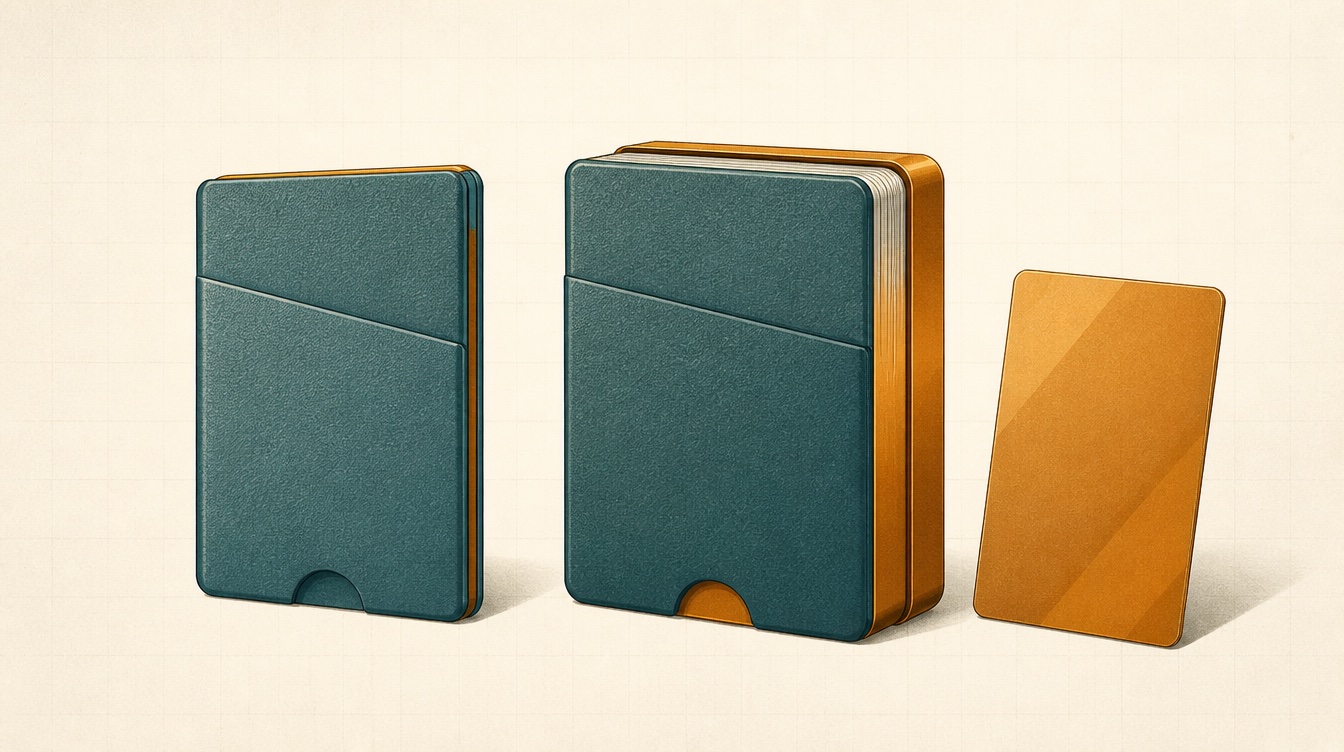
A 35pt toploader is rated to hold about 0.89mm of card, and a 55pt is rated for about 1.40mm, a difference of roughly half a millimeter. That sounds small, but it's the gap between a raw or lightly sleeved standard card and a card that's actually thick, whether that's a modern foil-heavy Pokemon pull, a card with extra holo layers, or a standard card double-sleeved. Buy 35pt as your default. Size up to 55pt only once you've hit a card that actually resists going into the smaller size.
Side by side
| 35pt | 55pt | |
|---|---|---|
| Thickness capacity | 0.89mm | 1.40mm |
| Interior footprint | ~69.9x98.4mm | Same footprint, more depth |
| Best for | Raw or penny-sleeved standard cards | Thicker cards, or a card plus a heavier sleeve |
| BCW's equivalent tier | 35pt | 59pt (1.50mm) |
Both sizes share the same width and height opening. Nothing about the card's footprint changes between them; it's purely a thickness upgrade.
When 35pt is enough
Most cards are 35pt cards. A base-rarity Magic, Pokemon, or One Piece card runs about 0.305mm on its own (about 12pt), so a 35pt toploader gives it comfortable room with a penny sleeve on. Sports cards and other standard-format cards fall in the same range. If you're batch-buying toploaders for a collection that's mostly commons, uncommons, and ordinary base cards, 35pt is the right call and the cheaper one.
When to size up to 55pt
The signal is physical, not theoretical: the card doesn't slide in cleanly, the toploader bows slightly at the corners, or you can feel resistance instead of a smooth glide. That happens most often with modern chase-tier cards. Full-art, V, VMAX, and similar Pokemon cards are commonly reported as running noticeably thicker than a base card because of extra foil and holo layers stacked on the cardstock. A 35pt built for a 12pt card doesn't have the margin to absorb that extra material gracefully. Step up to 55pt (or BCW's 59pt equivalent) and the same card sits without strain.
Double sleeving pushes you toward 55pt for a different reason. Two sleeves around a card add real thickness even though the card itself hasn't changed, and a 35pt's 0.89mm capacity can run out fast once you've stacked an outer and an inner sleeve. If you're routinely double sleeving before toploading, treat 55pt as your starting point instead of 35pt. For the width side of that question, see do sleeved cards fit in toploaders.
Our take
Buy 35pt in bulk for everything ordinary; it's the cheaper size and it's correctly matched to what most cards actually need. Keep a smaller stack of 55pt on hand specifically for the thick pulls and double-sleeved cards, rather than defaulting every card to the bigger size. Going 55pt across the board wastes money and leaves thinner cards with too much play inside the holder, which isn't better protection, just looser protection. The wrong move in the other direction is worse, though: forcing a thick modern card into a 35pt that's visibly straining at the seams is how corners get creased and toploaders crack.
Quick answers
What toploader size should I use for thick Pokemon cards? Start at 55pt for V, VMAX, ex, and full-art cards. If the card still feels snug, go to 75pt rather than forcing it.
Is there a size between 35pt and 55pt? Not in our data. Ultra Pro and Cardboard Gold jump straight from 35 to 55. BCW's closest equivalents are 35pt and 59pt, so the gap is similar across brands.
Can I use 55pt for every card just to be safe? You can, but it's overkill for raw base cards and costs more per holder for space you won't use. Match the size to the card instead of defaulting to the bigger one everywhere.
Does 55pt fit in the same binder pages or boxes as 35pt? The toploader's width and height don't change between 35pt and 55pt, so anything rated to hold a toploader at all should treat the two sizes the same. Depth-sensitive storage is the only place the extra thickness matters.
The difference between these two sizes is small on paper and obvious in your hand the moment you try to force the wrong card into the wrong holder. Keep both in stock, and let the card tell you which one it needs.