Semi-rigid holders: when floppy beats rigid
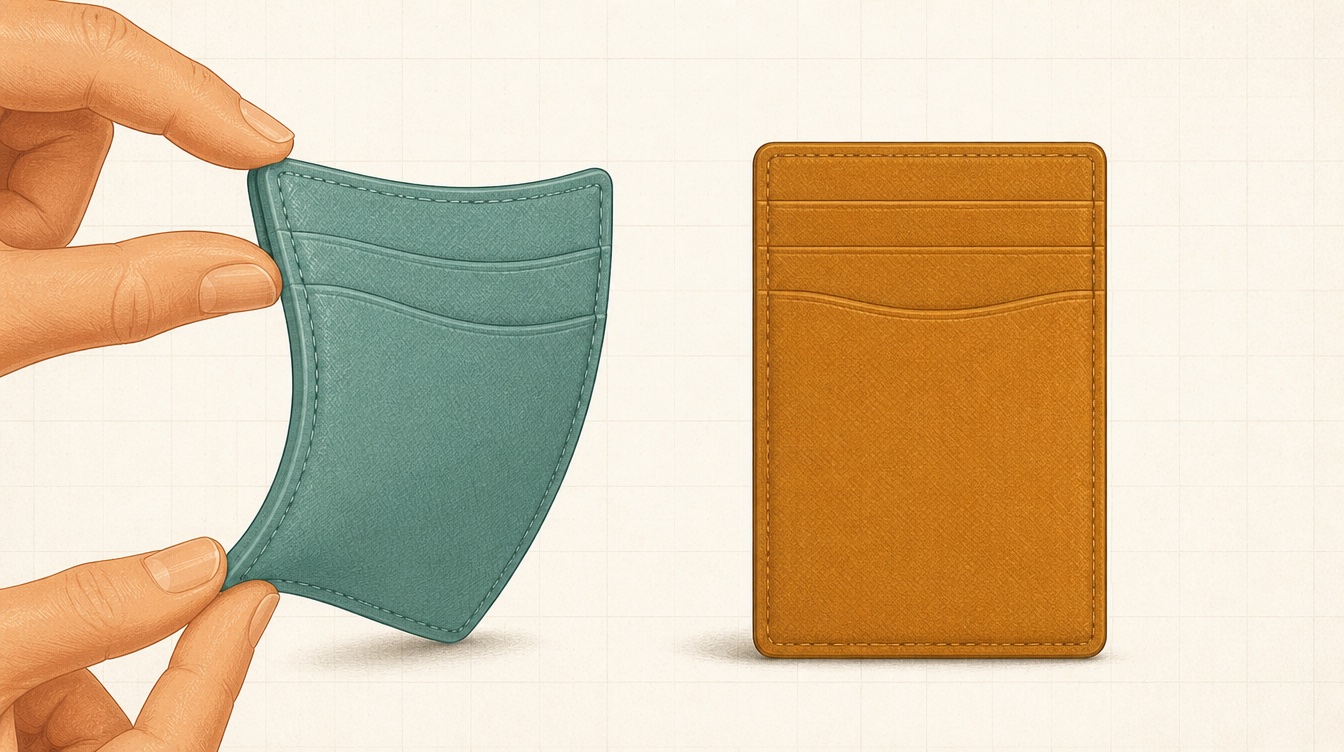
A semi-rigid holder is built to flex, and that's the entire reason it exists alongside rigid toploaders instead of replacing them. Grading companies including PSA ask submitters to use a semi-rigid holder rather than a rigid toploader, because a holder that can bend a little survives being handled, stacked, and rubber-banded through a grader's intake process without cracking or popping open the way a rigid toploader can under that kind of pressure. For everyday storage or shipping a single card, a rigid toploader is still the better call, since it resists an outside impact instead of just tolerating an inside bend. Which one you want depends entirely on what happens to the card next.
What's actually in our data
Card Fit Lab's digest lists the BCW Semi-Rigid Card Holder #1, with an interior around 81x108mm, noticeably roomier on both dimensions than the roughly 69.9x98.4mm opening on a standard rigid 3x4 toploader. That extra space isn't accidental. A semi-rigid holder is designed to hold the card plus a penny sleeve with a bit of give left over, since it's meant to be handled and flexed repeatedly rather than sit untouched in a box.
| Rigid toploader (35pt) | Semi-rigid holder | |
|---|---|---|
| Interior size | ~69.9x98.4mm | ~81x108mm (BCW Semi-Rigid Card Holder #1) |
| Rigidity | Fixed, cracks under enough pressure | Flexes, doesn't crack |
| Typical role | Everyday storage, shipping, display | Grading submissions, bulk stacking |
| Closure | Open top, card slides in | Open top, card slides in, but the whole holder can bow |
Why grading flow wants floppy
Cards headed to a grader don't travel one at a time. They're batched, stacked, and often rubber-banded together in small groups before they ship, and that stack gets handled by hand at scale on the receiving end. A rigid toploader under a rubber band and the weight of other holders in a stack can crack or pop its seams open. A semi-rigid holder just bows a little and takes the pressure in stride, which is exactly why PSA's own submission guidance points people toward this style of holder (often called a "Card Saver 1" in hobby shorthand) rather than a standard toploader. The floppiness that seems like a downside for everyday storage is the entire feature for this specific job.
The common flow looks like this: card goes into a penny sleeve first, then into the semi-rigid holder, and then that holder joins a small stack with others, banded together for shipping. It's a different pipeline than the one-card-per-toploader habit most collectors default to, and it's worth knowing before you send anything off.
Where rigid still wins
Outside of a grading submission, a semi-rigid holder gives up something real: resistance to an outside impact. Drop a stack of semi-rigid holders and they can bend under the weight in a way a rigid toploader won't. For a card sitting in a box, riding in a binder pocket, or shipping solo to a buyer, a rigid toploader is doing a job a semi-rigid holder isn't built for. The bend that protects a submission stack is the same bend that offers less structure against a corner getting knocked in transit.
Our take
Buy semi-rigid holders when you're actually about to submit cards for grading or ship a small stack of them together, and stick with rigid toploaders for everything else. Building a whole collection around semi-rigid holders because "PSA likes them" misreads why PSA likes them: it's a submission-logistics choice, not a claim that flexible plastic protects better in general. If a card isn't going anywhere near a grading company, a rigid toploader is still doing the better job of keeping an outside knock from becoming a dent.
Quick answers
Do I need a semi-rigid holder for every card I own? No. Reserve them for cards you're actively submitting for grading or shipping in a banded stack. A rigid toploader is the right everyday choice for the rest of a collection.
Can I use a semi-rigid holder instead of a toploader for shipping a single card? You can, but a rigid toploader generally offers more resistance to a hard knock for a single card traveling alone, which is the more common shipping scenario.
Is a semi-rigid holder the same as what people call a "Card Saver"? Yes, that's the hobby's common name for this style of holder, and it's what most grading companies mean when their submission instructions ask for a semi-rigid option.
Does a semi-rigid holder replace the sleeve underneath the card? No. The typical flow still sleeves the card first, then loads the sleeved card into the semi-rigid holder, the same layering logic as a toploader.
The floppiness looks like a compromise until you know what it's compromising for. Once a card is headed into a stack instead of a box by itself, bendable stops being a weakness and becomes the whole point.