How to ship graded slabs safely
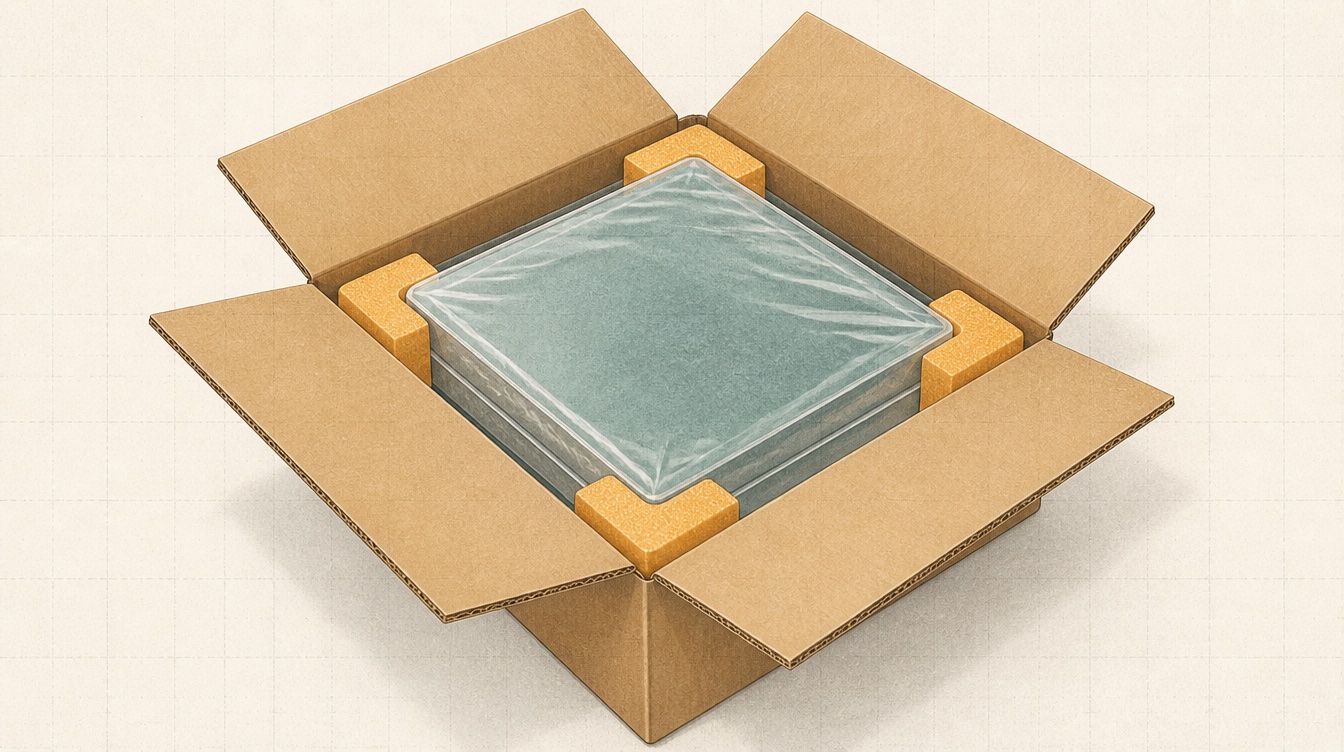
Ship a graded slab in a small, rigid box, never an envelope, with cushioning on all six sides so the case can't shift and take a direct hit on a corner or edge. A raw card's main risk in transit is bending. A slab has already solved that problem; the risk shifts to the plastic case itself cracking, and a cracked case is treated as damage even when the card inside comes through completely fine.
Why a slab changes the whole shipping problem
Once a card is graded and encapsulated, the case is doing the job a toploader used to do, and it does it well against bending and surface contact. What it doesn't do well is absorb a sharp impact on a corner. PSA, BGS, and CGC cases are rigid plastic, and rigid plastic under enough concentrated force cracks rather than flexes. A cracked slab is a real value hit on a graded card even if you can see the card itself is untouched, because buyers (and future buyers) read a cracked case as a red flag regardless of what's inside it. That's the opposite of a raw card, where a taped-shut toploader and a soft envelope are plenty.
It's also worth knowing that some of the cheapest mail programs, including eBay's own low-cost envelope class, exclude slabs outright because they're too thick and rigid for sorting equipment built around flat paper mail. If you're shipping a slab, you're already outside the cheapest tier by definition. Budget for a small box and real packing materials instead of trying to force a slab into anything envelope-shaped.
The packing method that holds up
Wrap the slab itself first, either in bubble wrap or a soft poly bag, so nothing in the box makes direct contact with the case's edges or the label window. Then build cushioning around all six sides inside a box sized just a bit larger than the slab, not a box so big the slab has room to travel and gain speed before it hits a wall. Crumpled packing paper, more bubble wrap, or foam sheets all work; the goal is that the slab can't move once the box is sealed, checked by giving the closed box a gentle shake before you tape it shut.
Skip tape directly on the slab's label window if you can avoid it, since residue there reads as tampering to a buyer even when it isn't. A layer of soft wrap between the slab and any tape solves that. For high-value slabs, add a layer of rigid support, a stiff piece of cardboard or a thin box-within-a-box, so an impact that would dent the outer box has something firmer to stop against before it reaches the case.
| Shipping raw card | Shipping a graded slab |
|---|---|
| Sleeve, toploader, sealed envelope or thin mailer | Wrapped slab, cushioned on all sides, rigid box |
| Main risk: bending, surface scuffs | Main risk: case cracking from impact |
| Cheap mail classes usually eligible | Cheap flat-mail classes usually exclude slabs |
| Toploader does the rigidity job | Slab case already does that; padding job shifts to impact absorption |
What about the card before it's graded?
Everything above covers a card that's already back from grading. If you're prepping a raw card to send in for grading in the first place, that's a different packaging problem with its own accepted standard; see our guide on PSA submission holders and Card Saver 1 vs 2 for what graders actually want cards arriving in.
Quick answers
Can I ship a slab in a padded envelope instead of a box? You can if the envelope is stiff and well-cushioned on every side, but a small box gives you more control over keeping the slab from shifting, and it's the safer default for anything valuable enough to have been graded.
Do I need to double-box a slab? Not always, but for a high-value slab, a stiff inner layer plus an outer box with its own padding gives you a second line of defense if the outer box takes a hard hit.
Is tracking and insurance worth it for a graded card? Yes, more than for most raw cards. The value concentrated in one slab, plus the fact that a cracked case is a real loss even without a lost card, makes the extra cost of tracking and insurance an easy call.
Will a cracked case ruin the grade? The grade itself is tied to the card's condition at the time it was graded, but a cracked case is still a real problem for resale, since buyers expect an intact case and some grading companies charge to reholder a cracked one.
A slab arriving with a hairline crack is one of the more avoidable outcomes in this hobby. The packing is more work than a sleeve and a toploader, but it's the one situation where skipping a step actually shows up as a permanent mark on something you already paid to have graded.