How to ship a single trading card
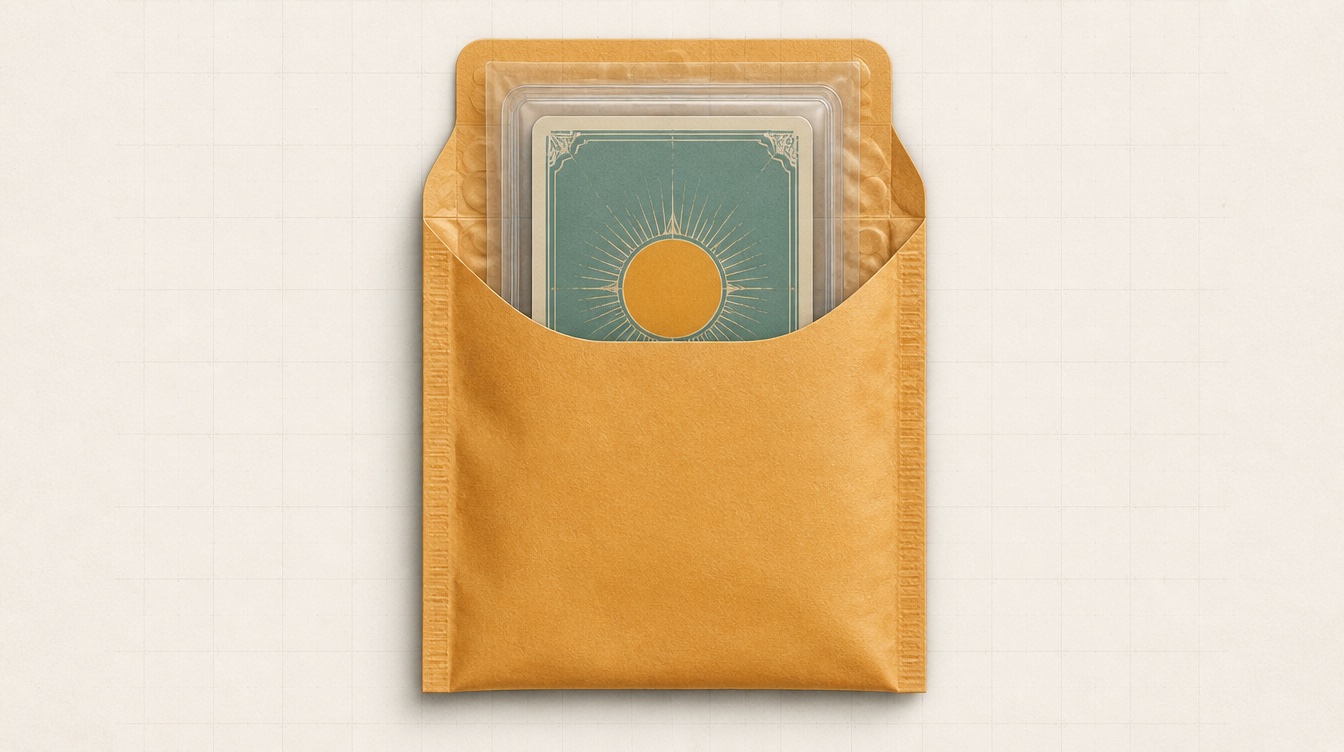
Ship a single card by sleeving it, dropping the sleeved card into a toploader, sealing the toploader shut with tape or a team bag so it can't slide open, then mailing that package in a plain envelope for lower-value cards or a small bubble mailer for anything worth more protecting. The sandwich (sleeve, toploader, seal) is the same for almost every card. The only real decision is which outer envelope matches what the card is worth.
The sleeve, toploader, and team bag sandwich
Start with a penny sleeve or perfect-fit sleeve against the card itself. That's the layer that stops surface scuffs from anything touching the card directly, and it's cheap enough that skipping it makes no sense even on a card worth a few dollars.
Drop the sleeved card into a toploader. This is the layer that keeps the card flat and rigid, which matters more than people expect: a card that can bend inside its packaging will bend, especially once a mail sorter or a delivery bag stacks weight on top of it. For sizing the toploader itself, 35pt covers a raw or penny-sleeved standard card; see our toploader size chart if the card runs thick, or run the combo through our fit checker if you're not sure a specific sleeve and toploader pair actually clears.
The last layer is what a lot of sellers skip, and it's the one that causes the most damage claims: sealing the toploader shut. A toploader's open top means the sleeved card can work its way partway out during transit, and a corner poking out is exactly what catches on a mail sorter and tears the whole package. A team bag (a small resealable poly bag sized for a sleeved, toploadered card) solves this cleanly. Painter's tape across the open edge works too, and it comes off without leaving residue on the toploader. Either way, the goal is the same: nothing shifts between the moment you seal it and the moment it arrives.
PWE vs bubble mailer, decided by value
Once the card is sealed in its toploader, you're choosing between a plain white envelope (a PWE) and a padded bubble mailer. That choice should track the card's value, not habit.
For cards worth a few dollars, a PWE with light cardboard reinforcement on both sides of the toploader is efficient and appropriate. The cardboard matters: without it, a toploader riding alone inside a paper envelope can still get bent under enough pressure, corner-first, in a mail tray. Add a rigid piece cut slightly larger than the toploader on each side and taped down, and that risk mostly goes away.
Once a card's value climbs past the point where a lost or crushed envelope would actually hurt, move up to a bubble mailer with tracking. The padding absorbs impact a flat envelope can't, and the mailer holds its shape better in a mail bag stuffed with heavier packages. It costs more than a stamp, but that's the trade you're making for peace of mind on a card that isn't cheap to replace.
| Method | Best for | What it adds | What it lacks |
|---|---|---|---|
| PWE + cardboard | Low-value commons, bulk lots | Cheap, fast, fine for most cards | No cushioning against crushing or bending force |
| PWE + tracking | Mid-value singles you want proof of delivery for | Delivery confirmation without much added cost | Still a flat envelope; corners can take a hit |
| Bubble mailer + tracking | Cards worth protecting from impact | Cushioning, a stiffer package, tracking | Costs more, takes up more room per shipment |
Does a plain envelope actually protect the card?
A standard letter-rate envelope generally needs to stay under roughly a quarter inch of thickness to qualify for machinable letter rates without a non-machinable surcharge. A sleeved card in a 35pt toploader sits well under that on its own. Add rigid cardboard on both sides and you're still fine for most standard postal rates, but if you're piling on toploaders, tape, and thick cardboard, check that you haven't pushed the package into a thicker, more expensive tier before you print postage.
Quick answers
Do I need a team bag if I already taped the toploader shut? No, pick one. Both exist to keep the toploader closed during transit; using both is redundant, not extra safe.
Can I ship a raw, unsleeved card safely? You can, but skip it if you can help it. A sleeve costs pennies and is the only layer standing between the card's surface and everything else in the package.
Is a bubble mailer overkill for a common card? For most commons, yes. Save the bubble mailer budget for cards where a crushed corner or a bent case would actually cost you something.
What if the card is a graded slab, not a raw card? Different problem entirely. A slab needs its own packaging built around protecting the case, not the sandwich above; see our toploader vs one-touch guide for how graded cards differ from raw ones in what actually holds them.
Most shipping damage we hear about isn't a bad envelope choice. It's a toploader left unsealed, sliding around loose until a corner finds the one weak spot in the package. Get that part right and the rest of the decision is mostly about how much you want to spend on peace of mind.