Side loading vs top loading binders, settled
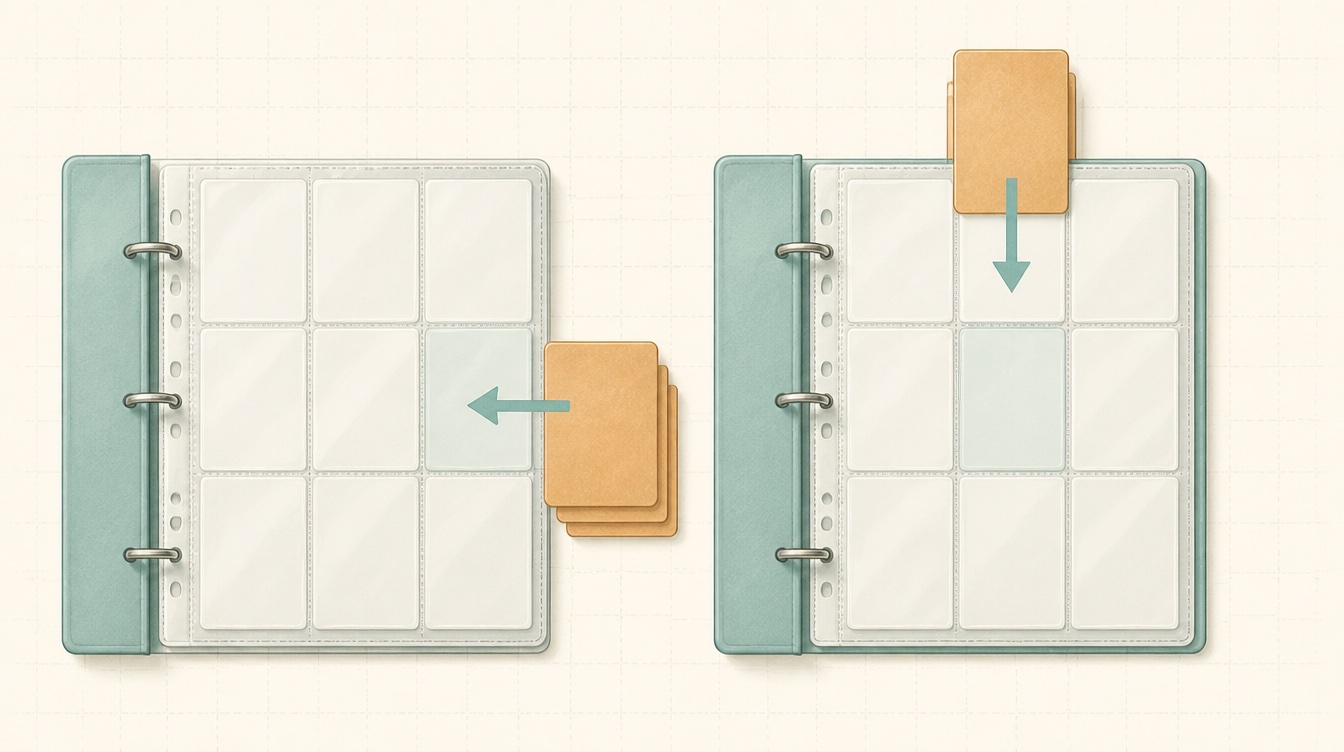
Settled, and settled a while ago: side loading won. Every binder we track, all 39 of them, opens on the side edge rather than the top, and that isn't brand preference. It's the entire format converging on the one design that doesn't drop cards. If you're comparing the two before buying a binder, you're not choosing between two live options; you're checking whether the thing you're looking at is actually a binder built for cards or a repurposed photo album that happens to have pockets.
Why top loading pockets lose cards
Top loading pockets open along the upper edge of the page. That works fine exactly as long as the page never moves, which is not how anyone actually uses a binder. Flip through one and roughly half the pages you look at are briefly upside down, spine up, page hanging open, for the second or two it takes to turn. On a top-loading pocket, that's the exact moment gravity lines up with the seam and pulls the card toward it. A pocket that's worn even slightly loose starts letting cards slide partway out, or drop free the moment the binder gets picked up, shaken, tilted while you're digging for a specific page, or stood on its spine on a shelf between two other books.
It gets worse with use, not better. Every flip stretches the seam a fraction more, so a binder that held cards fine on day one starts losing them by year two, right around the point a collector has stopped double-checking every page before closing the cover. The failure is quiet, too: a card doesn't announce that it's slipped half out of a top-loading pocket. You find out when you go looking for it later and it's gone, or when it turns up creased at the bottom of a bag.
Side loading, the short version
Side loading closes off the top and bottom of the pocket entirely and opens on the vertical edge instead. Turning a page, tilting the binder, storing it flat, none of that lines gravity up with the opening. The only way a card has a real shot at sliding out is tipping the whole binder onto its side edge, which almost nobody does by accident. That's the whole advantage, and it's enough: a card can sit in a side-loading pocket through years of regular flipping without ever threatening to fall out.
Why gravity decided this, not taste
This isn't a case of one format being trendier or a manufacturer chasing an aesthetic. Top loading pockets fail at the one job a binder page has: keeping the card inside it during normal handling. Nobody flips through a binder gently and evenly. Pages get turned fast, binders get carried at an angle, stacked flat on a desk, tipped on end while someone digs through a shelf for the one they want, sometimes shoved spine-first into a bag between a laptop and a water bottle. Side loading tolerates all of that because the opening never faces down under normal handling. Top loading only works in the narrow case where the binder stays upright and still, which describes almost no real use of one, and describes zero minutes of a binder actually being carried anywhere.
Every binder in our dataset, 39 of them across every brand, pocket count, and closure we track, loads from the side. Not one top-loading page made the list.
What this means when you're buying
You don't need to check loading style when shopping binders today. It's not a spec anyone lists, because it's not a spec anyone still varies; every real trading card binder on the market solved this the same way. The one place the distinction still comes up is toploaders themselves, the rigid card holders, not binder pages, and their pockets side-load too: the three binders that actually fit a toploader still open on the side edge like everything else. They're just cut to a bigger size for a stiffer card, which is a different problem entirely from the one this guide is about; if that's what brought you here, our explainer on fitting toploaders into a binder covers it directly. What you should actually spend time comparing when picking a binder is pocket count, capacity, and whether it zips shut, not loading direction, since that question was answered industry-wide before most of today's binders shipped.
Where the loading-style question does still matter is spotting a bad product before you buy it. A binder advertised for trading cards that opens from the top is a red flag worth taking seriously, not a quirky feature. It usually means the page was designed for something else first, photos, stickers, coupons, and cards were an afterthought, retrofitted into a pocket shape that was never tested against a card sliding around loose in it.
That's also the pattern worth watching for on marketplace listings rather than brand storefronts: a no-name binder photographed at an angle that hides which edge the pocket opens on. If a listing won't show you the opening seam clearly, treat that as deliberate rather than an oversight. A side-loading binder has nothing to hide there, and most listing photos for the real thing show it without being asked.
Binder page design isn't a place where trends swing back and forth every few years the way sleeve colors do. Side loading solved a real problem once, every manufacturer adopted the fix, and the format hasn't moved since. If you ever come across a genuine top-loading page in the wild, read it as a warning about the rest of the product, not a style choice.