Sleeve thickness in microns, explained
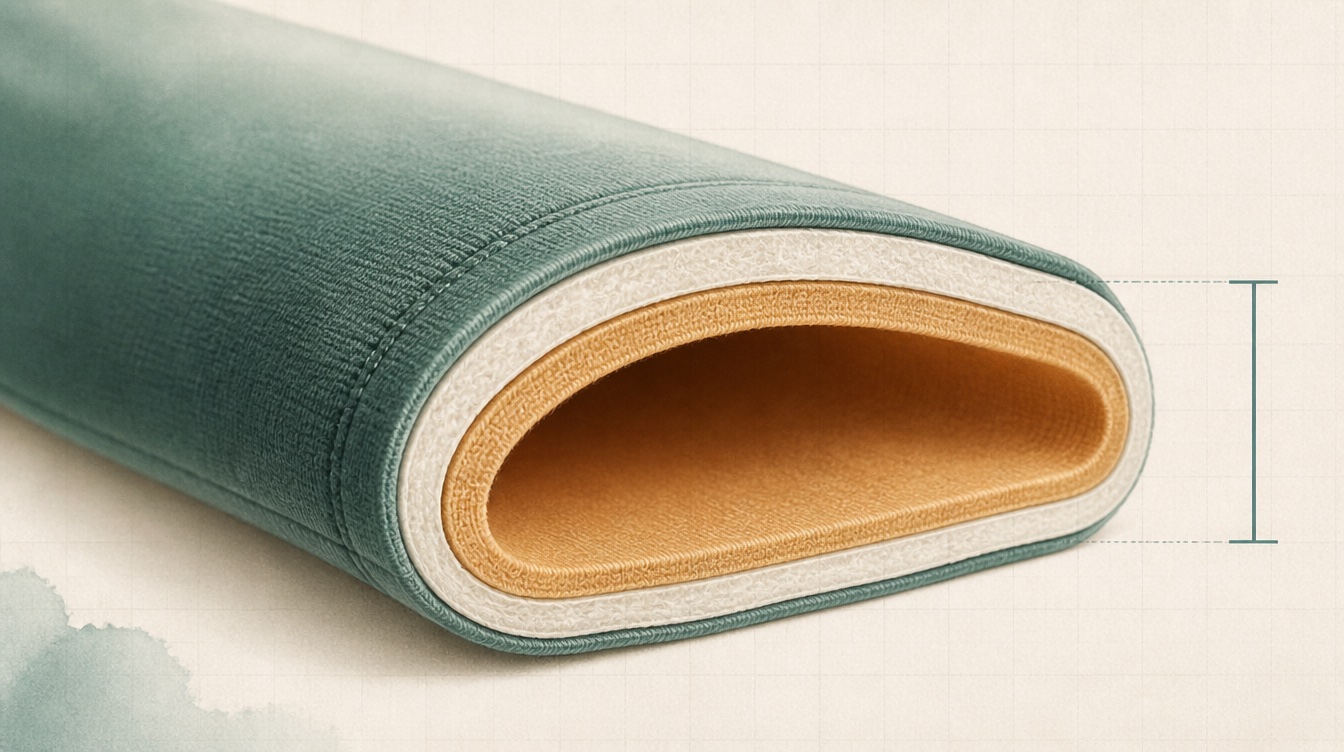
A micron is a thousandth of a millimeter, the unit sleeve plastic gets measured in because a single sleeve wall is too thin to describe usefully in millimeters. Most sleeve brands don't publish that micron number for their standard sleeves at all, so the number that actually matters for fitting a deck into a box is the one you can measure directly: how thick a full 100-card double-sleeved stack ends up, which real measurements put between 66mm and 70mm depending on the combo.
Why "microns" comes up at all
Cards themselves have a known thickness. A standard 63x88mm card, the size used by Magic, Pokemon, One Piece, Lorcana, and Flesh and Blood, measures 0.305mm thick, which is 305 microns. Sports cards run a hair thinner at 0.3mm (300 microns), and Japanese-size cards like Yu-Gi-Oh! measure 0.28mm (280 microns). Those numbers are settled and printed the same way across the hobby.
Sleeve plastic is thinner still, thin enough that talking in millimeters gets awkward, hence microns. The problem is that most manufacturers don't list a micron spec for their sleeves the way they do for card thickness. What we have instead is real-world proof: measured stack heights for 100 cards in specific double-sleeve combos, which tells you everything the missing micron spec would have told you, just from the other direction.
What the measured stacks actually show
Community measurements of full 100-card double-sleeved decks give us the numbers that matter:
| Combo (outer + inner) | 100-card stack | Per card | Two sleeve layers, card thickness subtracted |
|---|---|---|---|
| KMC Hyper Mat + KMC Perfect Fit | 66mm | 660 microns | 355 microns |
| Gamegenic Inner + KMC Hyper Mat | 67mm | 670 microns | 365 microns |
| Gamegenic Matte Prime + Gamegenic Inner | 68mm | 680 microns | 375 microns |
| Dragon Shield Matte + a Perfect Fit style inner | ~70mm | ~700 microns | ~395 microns |
That last column is the two sleeve layers alone, worked out by subtracting the standard card's 305-micron thickness from the per-card stack figure. It's not a manufacturer spec, it's what the real stack implies once you back the card itself out of the number. And it shows the spread is real: the gap between the tightest combo and the loosest one runs about 40 microns per card, which sounds tiny until you multiply it out.
How 40 microns per card becomes 4 millimeters
Multiply any of those per-card numbers by 100 cards and small differences stop being small. A 40-micron gap between the tightest and loosest combo, times 100 cards, is 4mm of extra deck thickness. That's not a rounding error against a deck box's fixed interior depth. It's the entire margin some boxes have to give.
The Ultimate Guard Boulder 100+ is the clearest example, with an interior measured at 68.3mm. The KMC combo at 66mm clears it with about 2mm to spare. The Dragon Shield combo at roughly 70mm doesn't fit at all, and that exact mismatch is one of the most commonly reported box complaints in the hobby. Same box, same card count, same rated capacity on the label, and the outcome flips entirely on which sleeves you picked.
Single sleeving does the same math, smaller
Single sleeve a deck and you're only adding one layer's worth of microns instead of two, which is why a single-sleeved 100-card deck fits into boxes that a double-sleeved deck of the same cards can't touch. If you haven't settled on double sleeving yet, our guide on whether double sleeving is worth it walks through when the extra thickness is worth the tradeoff and when it isn't.
Quick answers
What does "sleeve microns" actually mean? It's the thickness of the plastic itself, measured in thousandths of a millimeter. Most brands don't publish it for standard sleeves, so real stack measurements are the more reliable number to plan around.
How thick is a card sleeve on its own? We can't state a verified per-brand figure since it isn't published consistently. What we can say with confidence is the combined stack: 100 double-sleeved standard cards measure 66mm to 70mm depending on brand combo, which is the number that decides whether a deck box closes.
Does a few microns per sleeve really matter? Yes, once you're stacking 100 of them. A 40-micron-per-card difference between two combos becomes a 4mm difference across a full deck, which is exactly the range separating a box that closes from one that doesn't.
Are Japanese-size sleeves thinner too? The cards underneath them are. A Japanese-size card runs 280 microns thick against a standard card's 305, a small but real difference on top of whatever the sleeve itself adds.
Microns are an invisible unit until you multiply by a hundred. At that scale, plastic that's too thin to feel between two fingers is the difference between a deck box that shuts and one that doesn't; run your combo through the fit checker before you find out the hard way.