The best sleeves for shuffling
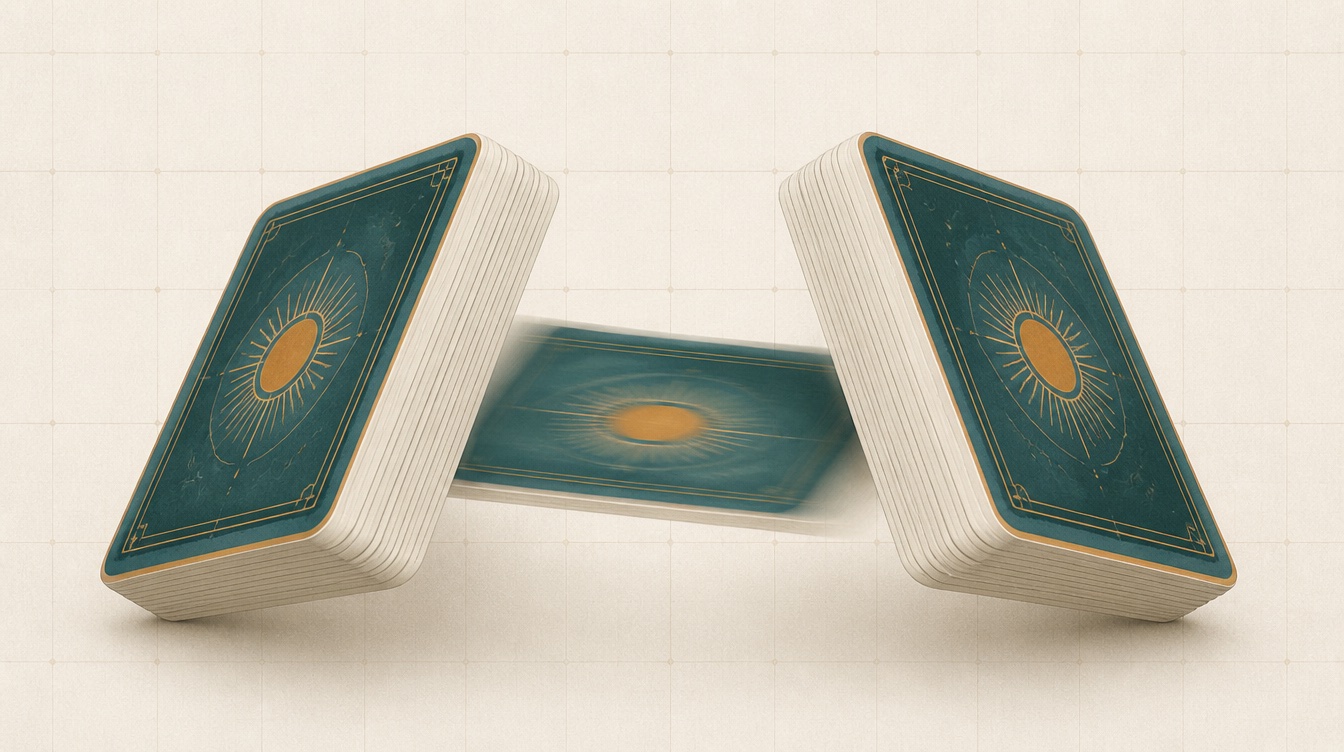
The easiest sleeves to riffle are matte-finish sleeves sized close to the card, not the glossy sleeves that come free with some starter decks. A matte surface has a texture that cuts down on the friction gloss creates, so cards slide past each other in a riffle instead of catching and sticking together. Size plays a part too: a snug standard sleeve keeps the card from sliding sideways mid-bridge, while an oversized one lets the card shift and jam the shuffle.
Why matte wins the shuffle test
Glossy sleeves have a smooth, almost slick coating. That sounds like it should help cards glide, and in a single overhand shuffle it barely matters. Riffle shuffling is different. You're bending two thin stacks and letting the corners fall against each other card by card, and a glossy surface has more real contact area at that corner, which is exactly where sleeves catch. Matte finishes break that contact up at a microscopic level, so the corners release cleanly instead of clinging. Humidity makes the gap worse. Glossy sleeves get noticeably stickier on a muggy day, while matte holds its feel more consistently across a season.
Most major brands sell the same sleeve in both finishes at the same size, which makes finish the one variable actually worth isolating if your shuffle feels bad.
| Sleeve | Finish | Size (WxH mm) |
|---|---|---|
| Dragon Shield Matte Sleeves | Matte | 66x91mm |
| Dragon Shield Dual Matte Sleeves | Matte | 66x91mm |
| Ultra Pro Eclipse Matte Deck Protector | Matte | 66x91mm |
| Ultra Pro PRO-Matte Standard Deck Protector | Matte | 66x91mm |
| Ultra Pro Eclipse Gloss Deck Protector | Gloss | 66x91mm |
| Ultra Pro PRO-Gloss Deck Protector | Gloss | 66x91mm |
| Gamegenic Matte Prime Sleeves | Matte | 66x91mm |
| Ultimate Guard Cortex Sleeves (Matte) | Matte | 66x91mm |
| Ultimate Guard Cortex Sleeves (Glossy) | Gloss | 66x91mm |
Same footprint, opposite feel. That's the whole argument for shopping by finish first.
Fit is the second lever
A standard card is 63x88mm, and a standard sleeve like the ones above runs 66x91mm, leaving a small, even margin around the card on every side. That margin has to exist for the card to slide in at all, but it also needs to be small enough that the card doesn't wander during a bridge. Sleeves running noticeably larger than that band feel sloppier in hand, even if they're technically the same "standard" size class. If you play a small-card game like Yu-Gi-Oh, the same logic applies at the Japanese size class, around 62x89mm against a 59x86mm card. Check our standard sleeve size guide if you want the full gap math across sizes.
Brand-new sleeves also shuffle stiffer than broken-in ones. The plastic softens a little after a few games, and a deck that feels clunky out of the pack often loosens up on its own by the third or fourth match. Give a new box of sleeves a game or two before you write it off.
Matte, gloss, or something in between
Some players like a middle ground: a matte outer with a glossy or semi-glossy inner sleeve underneath, which keeps the tactile grip of matte on the surface you're actually touching while adding a slicker layer between card and outer. That's a double-sleeve setup, and it changes stack thickness as much as it changes feel, so it's worth reading up before committing a whole deck to it. Our Dragon Shield vs KMC vs Ultra Pro comparison covers how those three brands' matte lines actually differ in hand, beyond just the name on the box.
Quick answers
Do glossy sleeves shuffle worse than matte? For most players, yes. The smooth surface creates more corner-to-corner contact during a riffle, which shows up as sticking, especially in humid rooms.
Are expensive sleeves always easier to shuffle? No. Price tracks things like seam durability and clarity more than shuffle feel. Some budget matte lines shuffle just as well as premium ones; the finish matters more than the price tag.
Does sleeve thickness affect shuffling? Thicker single sleeves shuffle close to a bare deck. Double sleeving adds noticeably more resistance no matter which finish you pick, because you're bridging two layers of plastic instead of one.
Will a new deck of sleeves always feel stiff? Mostly, yes, at first. Expect it to smooth out after a handful of shuffles as the sleeves flex and lose that fresh-out-of-the-box stiffness.
If your shuffle feels bad and you've been blaming the brand, check the finish before you blame the name on the pack. Two sleeves with identical dimensions can feel completely different in a riffle, and that difference almost always comes down to matte versus gloss. Run the fit checker if you also want to confirm your sleeved deck still closes in whatever box you're using; a great-shuffling sleeve that won't fit your box is only half a solution.